Generative engine optimization (GEO) services
Generative engine optimization (GEO) is how you structure a site so generative AI tools can read your services, quote accurate facts, and link to the right pages. I ship that structure in code: schema, llms.txt, question-led copy, and glossary-style definitions.
Models invent your pricing
Generative search fills gaps with guesses when pages lack direct answers
No extractable definition
Marketing copy reads well for humans but not for citation
Structured data out of sync
FAQ or Service JSON-LD missing, duplicated, or mismatched with HTML
Competitors own the prompt
Their service and FAQ pages answer the questions you should own
Put clear, attributable facts on your site so ChatGPT, Perplexity, Claude, Gemini, Copilot, and Grok quote you and link to you, not a competitor.
What generative engine optimization services include
Deliverables you can verify in View Source
Quotable answers above the fold
Opening copy and H2s that match how buyers and models ask questions
FAQ and Service schema
JSON-LD that mirrors visible FAQ and service copy on each URL
llms.txt
A root summary file listing key pages, facts, and canonical URLs
Glossary and definition pages
Short, self-contained definitions machines can extract and attribute
Entity consistency audit
Name, services, service area, and contact facts aligned site-wide
Crawlable, fast templates
Technical foundations so search and generative tools both trust the site
Why hire a developer for GEO
Implementation, not a PDF checklist
Shipped in your stack
WordPress, Shopify, Astro, or custom: templates, schema, and llms.txt go live
Honest scope
No guarantee of ChatGPT rankings; you get source quality and structure
Proof on this domain
This site's glossary, llms.txt, and landing FAQ patterns are production examples
GEO engagement process
Audit, build, validate
- 1
Discovery
Your services, buyers, service area, and which answers you want AI to cite.
- 2
Entity and gap audit
Where facts conflict, FAQs are missing, or schema does not match the HTML.
- 3
Implementation
Landing pages, glossary entries, llms.txt, internal links, and schema updates.
- 4
Validation
Rich Results tests, sitemap review, and manual checks in ChatGPT and Perplexity.
- 5
Handoff
Plain-language doc of what changed and how to add new pages without breaking GEO.
GEO services with a working example
Generative search does not send everyone through the same blue links list. When someone asks what you do, the model surfaces whoever stated the clearest facts: direct answers, headings that match real questions, and schema that matches what people read on the page. Do that well and you are more likely to be quoted accurately, get a link when the tool cites a source, and win the prompt over a competitor.
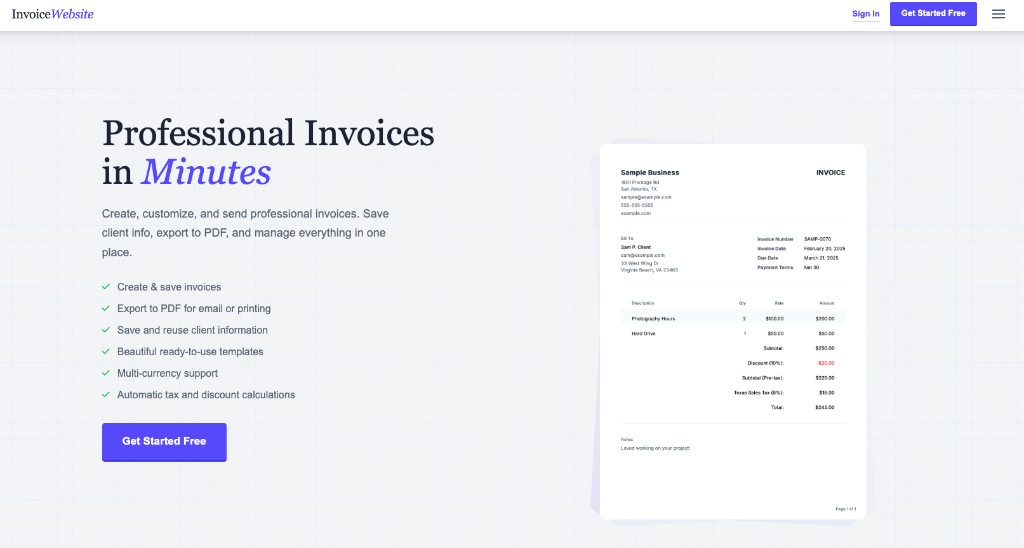
On invoicewebsite.com I shipped SEO-optimized marketing pages with FAQ schema, automated sitemaps, structured data, and profession-targeted landing pages built to rank and stay quotable for search and AI tools. On alanswenson.dev you are reading the same playbook: glossary definitions, GEO and Answer engine optimization (AEO) services services pages, and llms.txt at the domain root.
Generative engine optimization FAQ
Services, scope, and how GEO relates to AEO and SEO
- What are generative engine optimization services?
- They are hands-on work to make your site a trustworthy source for generative AI answers: clear definitions, FAQ content, Service and FAQ schema, llms.txt, consistent business facts, and internal links so models find the right URL. I scope and implement that on your live site.
- What is generative engine optimization (GEO)?
- GEO is the practice of structuring web content so generative AI tools like ChatGPT, Perplexity, and Google AI Overviews understand your pages and can cite them. See the full definition on Generative Engine Optimization (GEO).
- What is the difference between GEO and AEO?
- GEO (generative engine optimization) names optimization for generative AI systems broadly. AEO (answer engine optimization) names the same job when the goal is quotable answers in AI assistants. Foundations overlap heavily; see Answer engine optimization (AEO) services and Answer Engine Optimization (AEO).
- Is GEO the same as SEO?
- Most foundations overlap. SEO targets rankings in search results; GEO targets quotable facts and machine-readable structure. Strong SEO usually makes GEO easier because crawlers already trust the site.
- Do you guarantee mentions in ChatGPT or AI Overviews?
- No. I improve structure and source quality so citation is more likely. No one controls third-party models.
- What is llms.txt?
- A proposed root file that summarizes your site for language models. See llms.txt and the live file at llms.txt on this domain.
- Can you add FAQ schema on every page?
- FAQ schema must match visible FAQ content on the page. I add it where real questions exist, as on repair and services landings here.
- Retrofit an existing site or bake GEO into a new build?
- Both. Retrofits start with an entity audit and priority URLs. New builds on Small business website developer can include GEO in the initial template and content model.
- How do we start?
- Use the form below with your site URL, the services you want cited, and which AI tools matter to your buyers. I reply with a fixed-scope plan.
Tell me about your GEO goals
Site URL, services you want cited in AI answers, and whether this is a retrofit or a new build.